A full set of intelligent Furniture Machinery & Pocket Spring
Mattress machines are exported to 150+ countries
Date:2026-06-26
Furniture Watch recently spent over two weeks traveling through Turkey's three main mattress manufacturing clusters - Kayseri, Istanbul, and Izmir - visiting several large mattress factories along the way. Our team works in pocket spring mattress net production, so the trip had one clear purpose: see firsthand what kind of mattress machine technology Turkish factories actually run, and how they go about sourcing pocket spring machine equipment for their pocket spring production lines.
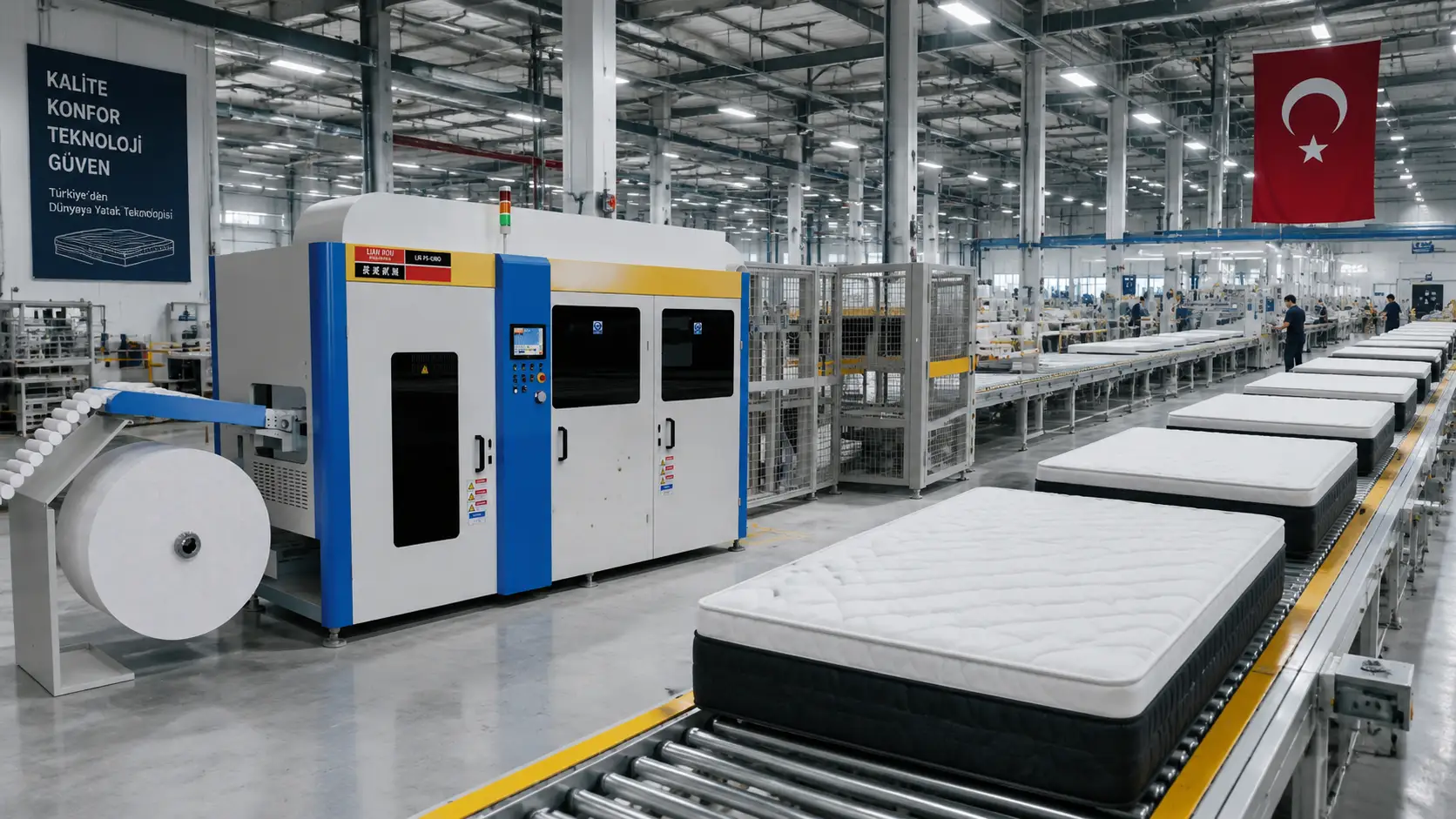
Many overseas peers still picture Turkey's mattress industry as a collection of small workshops. That's not what we found on the ground. Turkey is home to more than 200 mattress manufacturers of varying scale, and the Kayseri industrial zone alone accounts for roughly half of national output, with annual capacity approaching 2.7 million mattresses - enough to earn it the nickname “Mattress City.” Industry estimates put spring mattresses at around 95% of total production, split between traditional bonnell spring units and the increasingly popular pocket spring (individually wrapped spring) construction. Export demand is concentrated in Western Europe (Germany, France) and the Middle East/North Africa region, which is also why local factories pay close attention to comfort-zoning consistency in their pocket spring mattress net production.
We toured three factories of different scale and positioning - for this article we'll simply call them the export-focused plant, the domestic OEM plant, and the newly built digital plant.
At the export-focused plant, the workflow felt familiar: steel wire feeds continuously into a spring coiling machine, then moves into a pocket spring machine where individual springs are wrapped in non-woven fabric pockets and heat-sealed - arguably the single most important step in the whole pocket spring production line, since it determines zoning accuracy and noise performance further down the line. The wrapped spring units are then glued or thermally bonded into a complete pocket spring mattress net, layered with foam and quilted fabric, edge-finished on a tape edge machine, and finally compressed and boxed on a roll-pack machine for ocean freight.
The domestic OEM plant ran a more traditional setup, still relying heavily on bonnell spring equipment, with pocket spring machine upgrades coming at a slower pace - though the tradeoff is flexibility for smaller, more varied orders.
The newly built digital plant surprised us the most: almost no labor anywhere on the line.
When we asked factory managers about equipment sourcing, their answers pointed to roughly three channels.
First, established local machinery makers. Kayseri and Istanbul both have decades-old domestic mattress machinery manufacturers covering everything from spring coilers to tape edge and roll-pack machines. The upside is fast after-sales support and easy access to spare parts; the downside is that high-end automatic pocket spring machine technology tends to lag a bit behind.
Second, traditional European equipment, prized for mature, stable technology and long the default choice for larger Turkish factories - though at a price point and lead time that most smaller plants struggle to justify.
Third, Chinese mattress machine suppliers, which have gained ground fast on the back of cost-efficiency and shorter delivery times. The digital plant we mentioned earlier was actually running a fully automatic pocket spring production line from China's Lianrou Machinery - covering coiling, bagging, heat-sealing, net assembly, cotton layers gluing, tape edge sewing, rolling and packing in a box, under servo control, with a fraction of the manual headcount a traditional line would need. The plant manager was direct about why they picked Lianrou: competitive pricing, shorter lead times, and an on-site installation and commissioning team plus ongoing remote technical support - a service model that ultimately tipped the decision.
If you're evaluating a pocket spring machine or a full mattress machine production line yourself, a few channels are worth checking beyond going direct to a manufacturer.
• Industry trade shows: Turkey's own Sleepwell Expo, plus the Inegol and Istanbul furniture fairs, are good windows into local equipment demand. If you want direct access to Chinese suppliers, China's CIFF furniture fair typically has a dedicated mattress machinery section.
• Regional agents and distributors: many Chinese equipment makers maintain agents across Europe and the Middle East, which can mean faster response times and more reliable after-sales coverage.
• On-site factory audits: before committing to a major equipment purchase, visiting the supplier's own factory to watch the line run is far more reliable than judging from spec sheets or demo videos alone - which is, in a sense, exactly what this Turkey trip was for us.
This trip made the shifting competitive landscape in global mattress machinery much more tangible. European equipment still carries technical credibility, but Chinese-made pocket spring machine lines are steadily chipping away at that market share through automation and faster service response. For manufacturers back home, that's both an opportunity for upgrading and a reminder: competing in pocket spring mattress net production has never been just about price - it's about equipment reliability and long-term service capability.


TOP
